
10 min read
What Most People Miss in a Columbia Barndominium


Edited by: Louise (Editor In Chief)
Fact/quality checked before release.
Fact/quality checked before release.
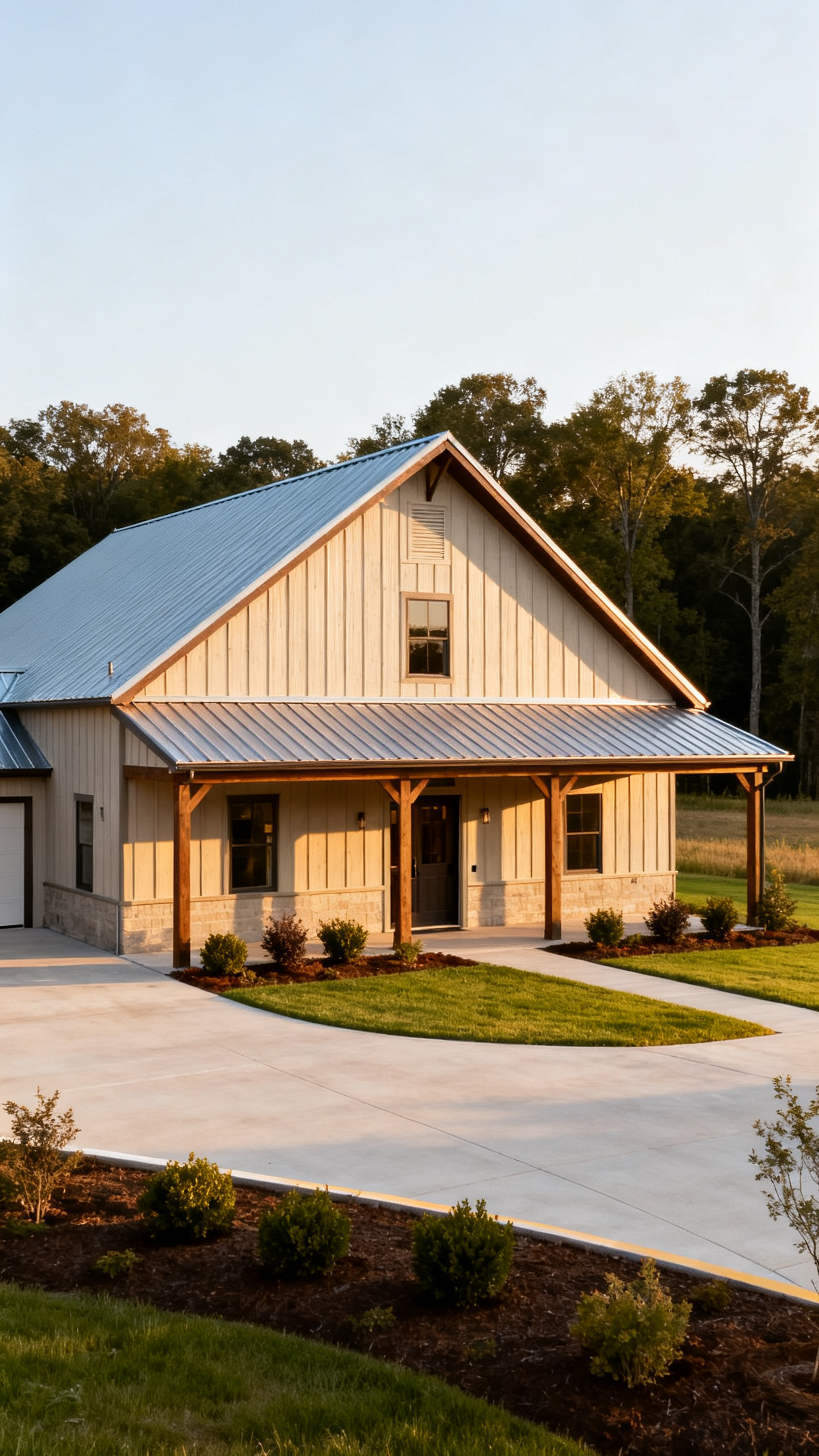
At first glance, a Columbia barndominium can look like just another nice country home. But when you slow down and really study it, the details tell a totally different story. That is usually what most buyers, builders, and even Pinterest scrollers miss. Toolsweek-style home content works best when it goes beyond pretty photos and explains why a design feels right, and that is exactly what this guide does. If you are comparing barndominium plans, curb appeal ideas, or rural home exteriors, these details matter more now because modern barn-inspired homes are getting more popular fast. In the next few minutes, you will see the exterior choices, site planning moves, and visual cues that give this Columbia barndominium its strong first impression.
-
Read the Roofline First
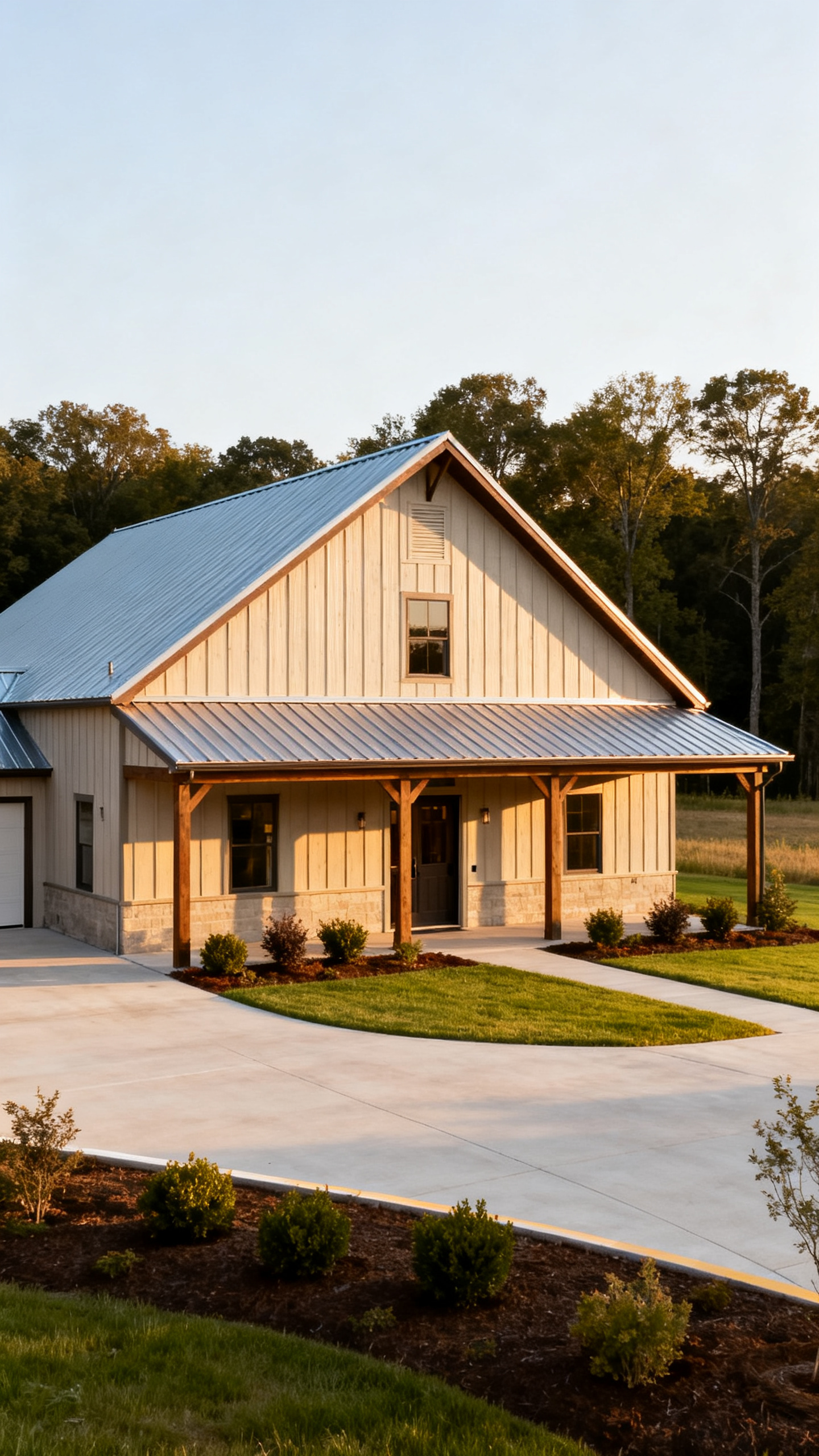
Most people look at siding color or the front porch first, but the roofline is usually what shapes the whole personality of a Columbia barndominium. If the roof looks too flat, too busy, or out of scale with the walls below it, the home can feel awkward even when the materials are expensive. That is a common mistake with barn-inspired homes. People copy features they like from different houses, then end up with a roof that fights the structure instead of supporting it.
Start by looking at the main gable shape and how clearly it reads from the road or from an aerial view. A strong Columbia barndominium usually keeps the roofline simple, balanced, and easy to understand. Notice whether the ridge line feels centered, whether secondary gables are used sparingly, and whether the covered entry fits into the roof plan instead of looking tacked on. Metal roofing works best here when the panel lines are clean and the overhangs are proportional. If you are planning your own build, compare front-elevation photos and drone-style views, because a roof can look fine straight on and messy from above.
That simple roof discipline is what gives a home that expensive, settled look. It creates visual calm, and buyers respond to that even if they cannot explain why. I once drove past a rural build that had great stone, great windows, everything, but the roof felt chaotic and the whole house just looked off. When the roofline is done right, the rest of the design suddenly makes sense. And once you see that, the facade details become a lot easier to judge.
-
Check the Exterior Balance
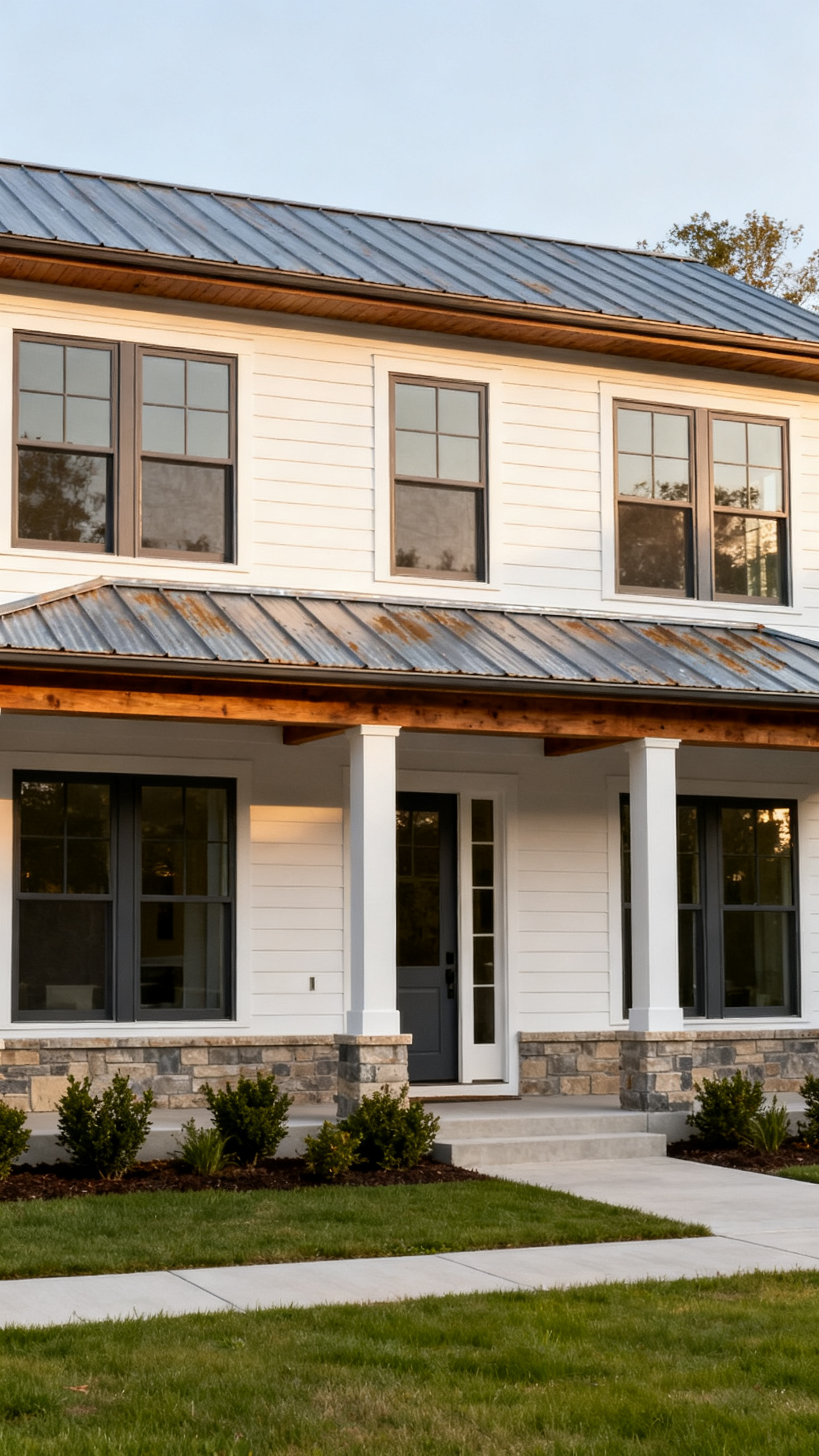
A Columbia barndominium stands out when the exterior massing feels balanced, not overloaded. A lot of country homes miss this and end up with too many materials, too many trim changes, or windows placed without rhythm. The result can feel loud instead of confident. Barndominiums work best when they lean into clean shapes and let proportion do the heavy lifting. That simpler look is not boring, by the way. It is usually what makes a home look more custom.
Pay attention to how the siding, windows, entry, and foundation relate to each other. Board-and-batten siding or horizontal siding can both work, but the choice should match the scale of the house and the roof style. Large windows need enough wall space around them to breathe. The covered entry should feel connected to the structure, not like an afterthought. Even the foundation line matters because a visible base can help ground the home visually. A good rule is to look for one dominant material, one supporting material, and one accent, rather than five competing ideas.
When that balance clicks, the property feels calm, polished, and much more memorable. It gives the kind of curb appeal that gets saved on Pinterest because the house looks intentional from every angle. You do not need wildly expensive finishes to get there either. Some of the best exteriors win because they edit well. And once the shell is balanced, the setting around it can do even more work.
-
Notice the Entry Sequence
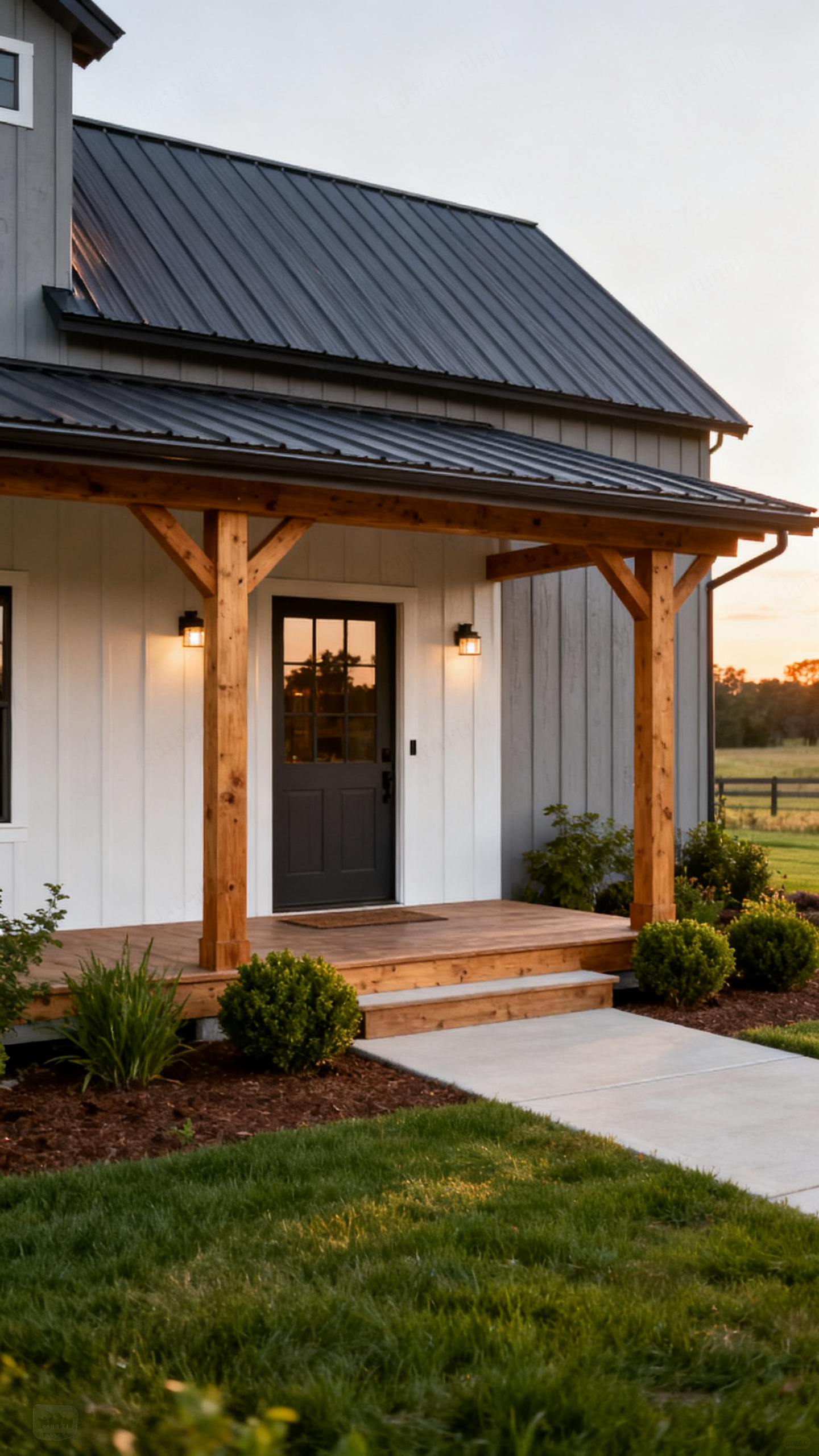
The front entry is one of those details people feel before they really notice it. If the driveway, walkway, porch cover, and front door do not guide the eye naturally, the home can seem less welcoming. That is a big missed opportunity with a Columbia barndominium because these homes often have strong forms that deserve an equally clear arrival experience. A pretty exterior without a readable entry can leave the whole place feeling a little cold.
Look at the path from the road to the front door. A logical driveway curve, a visible parking or turnaround area, and a clearly framed porch all help the house feel more usable. The covered entry should provide actual shelter and add depth to the facade, not just check a design box. Materials matter too. Wood posts, a concrete stoop, metal roof continuation, and simple lighting fixtures can create an entry that feels warm without getting fussy. If you are planning a build, stand back from exterior renderings and ask, “Would a first-time guest instantly know where to go?” If not, the entry probably needs work.
A well-designed entry makes the whole house look friendlier and more high-end at the same time. It also boosts curb appeal in photos because the eye gets a clear destination. That is one reason some homes keep getting shared while others do not. Tiny moments of clarity build trust. And after the entry works, the lot itself becomes the next thing that quietly sells the home.
-
Use the Setting Better
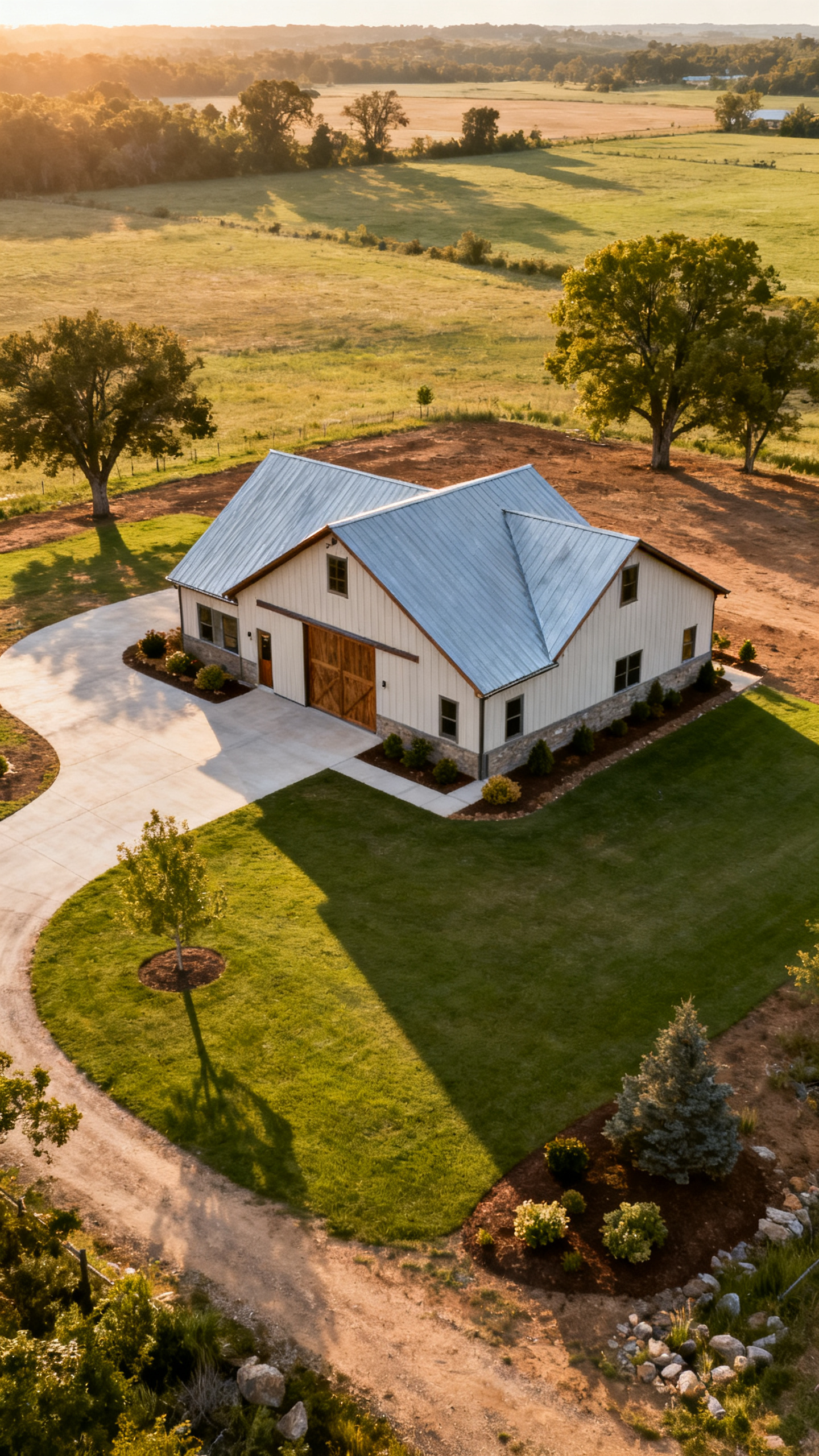
One reason this Columbia barndominium catches attention is that the surrounding property is doing real design work. That sounds obvious, but a lot of rural homes are dropped onto a lot with very little relationship to the land around them. Then the home looks isolated, oversized, or unfinished. Open space is powerful, but only when it is shaped on purpose. A good setting should make the house look anchored, not lonely.
Start by noticing how the driveway frames the home and how the lawn transitions into trees, shrubs, or natural countryside edges. A few mature trees placed well can soften the building mass and give scale to the structure. Shrub beds near the foundation can visually tie the house to the ground, while open lawn can preserve that broad rural feel people want from a barndominium. The trick is not to over-design it. Keep plants believable for the climate, spacing practical for maintenance, and the views open enough to let the architecture lead. Drone views are especially useful here because they reveal whether the property layout feels intentional.
When site planning is strong, the whole home appears more valuable and more peaceful. It photographs better, feels more established, and gives that hard-to-explain sense of arrival. That is a major reason a property gets strong curb appeal from both the road and the air. A house can be beautiful, sure, but the land around it is what often makes it unforgettable. And that leads right into the finish choices that seal the deal.
-
Focus on Material Restraint
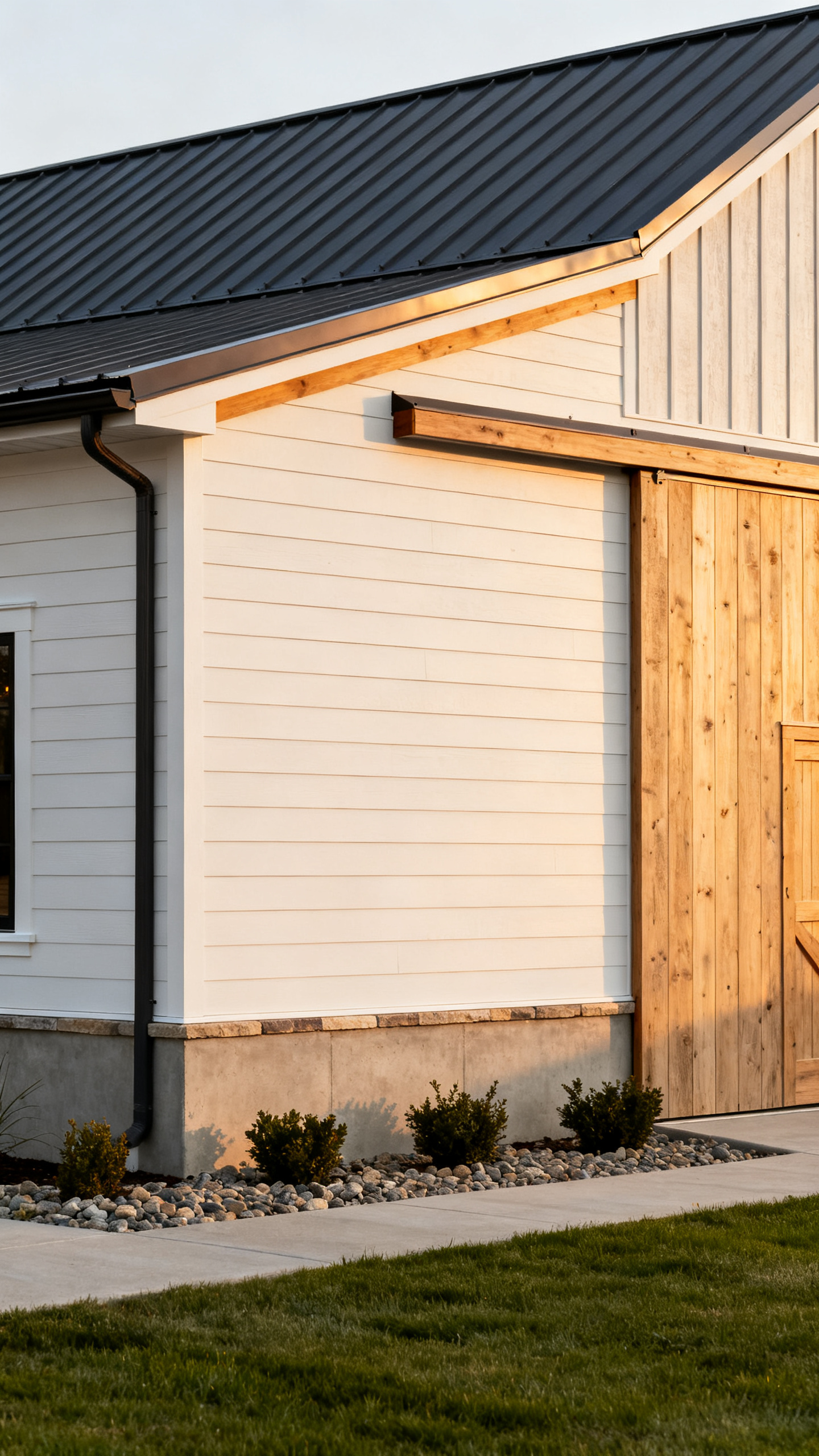
People often think standout curb appeal comes from adding more. More stone, more trims, more colors, more decorative features. But what makes this Columbia barndominium feel elevated is usually restraint. The materials are doing their job without shouting. That is a really important distinction in barn-inspired design. Since the form is already strong, too many finish changes can dilute the whole look and make the home feel less timeless.
A smarter approach is to choose materials that age well and belong together. Think metal roofing with a natural matte finish, siding with visible depth and shadow lines, wood accents used in small strategic areas, and a foundation material that quietly grounds the house. Keep the palette tight, usually two to three main tones, and let texture carry the interest. Look at how light hits the siding at sunset, how the roof color interacts with the landscape, and whether accent materials are repeated enough to feel intentional. Even gutters, garage doors, and porch posts should support the same story.
This kind of editing gives the home that polished, expensive look people save and share. It also protects the design from feeling dated too fast, which matters if you are building for long-term value. I learned this the hard way after loving a flashy exterior in photos that looked tired just a couple years later. Restrained materials stay sharp longer. And when all those choices line up, the final thing people notice is the overall first impression from a distance.
-
Step Back for Curb Appeal
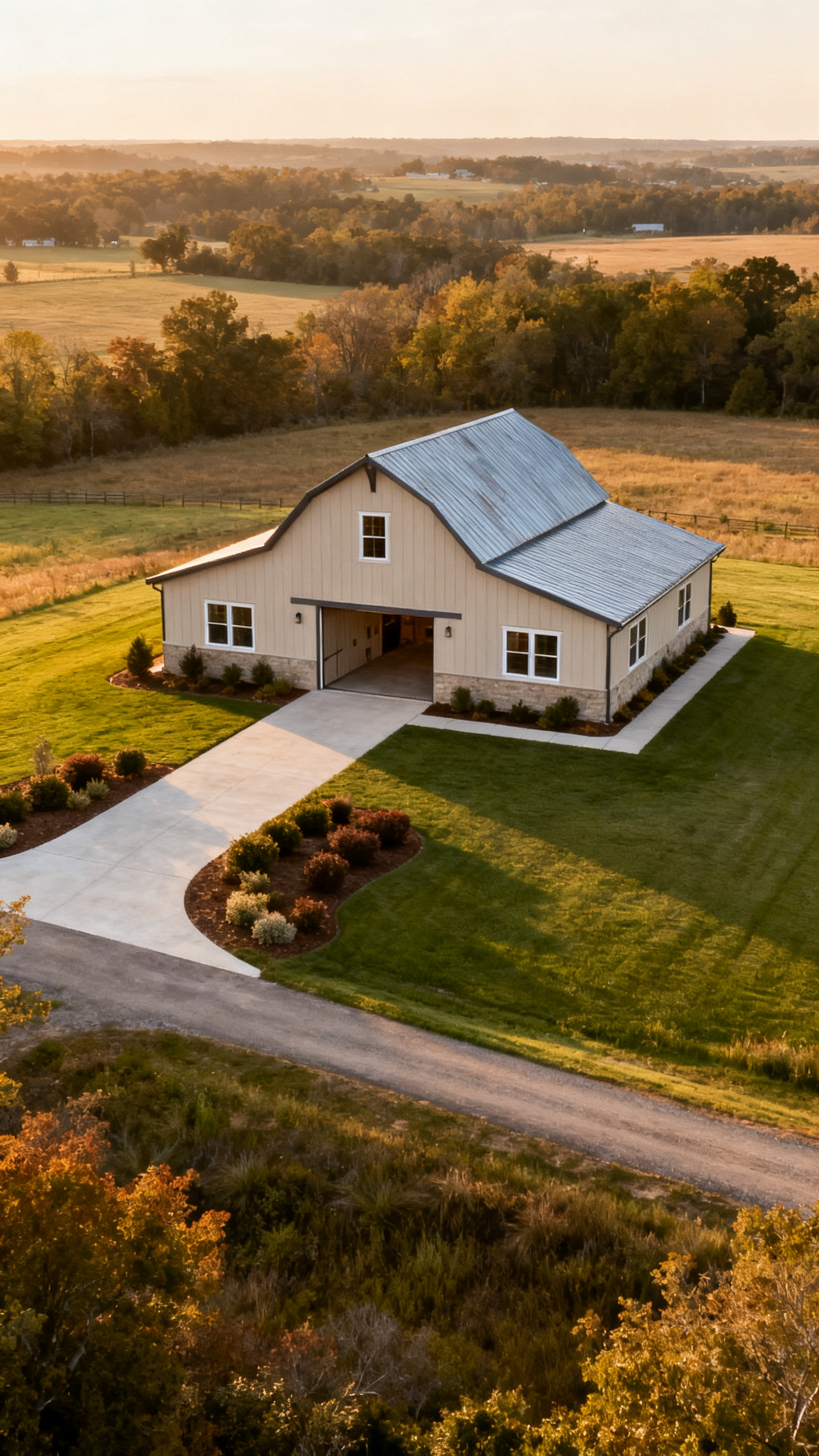
The biggest thing most people miss about a Columbia barndominium is that curb appeal is not one feature. It is the way every decision reads together from a distance. You can have great windows, a nice porch, and solid landscaping, but if the home does not create one strong visual message, the effect gets blurry. That is why some properties look amazing in person and online, while others feel forgettable the second you scroll past.
The best way to judge curb appeal is to literally step back. Look from the road, from a driveway entry point, and from an elevated perspective if possible. Ask whether the roofline is clear, the facade is balanced, the entry is obvious, and the setting supports the architecture. Then check whether the materials still feel calm at that distance. Photos help a lot because they flatten the scene and expose visual clutter fast. A home that reads clearly in one wide shot usually has better design discipline than one that only works in tight detail shots.
That zoomed-out view is where this Columbia barndominium really wins. The house feels complete, grounded, and peaceful all at once. It has that rare quality where nothing is begging for attention, yet the whole property pulls you in. That is the sweet spot for modern rural curb appeal, and honestly, it is what makes a pin like this stick in your head. Once you know what to look for, you will never unsee it.
The details that make a Columbia barndominium stand out are usually the ones people overlook at first. A clear roofline, balanced facade, welcoming entry, thoughtful site plan, and restrained materials all work together to create that strong curb appeal. That is exactly why this kind of home performs so well in Pinterest-style inspiration, it feels simple but deeply intentional. If you are planning, comparing, or just saving ideas, use these clues to spot what really gives a rural home its presence. The more you train your eye now, the easier your next design choice will be.
Pin this guide for later so you can compare Columbia barndominium details before your next build or inspiration search.