
11 min read
What Makes This West Virginia Barndominium Stand Out


Edited by: Louise (Editor In Chief)
Fact/quality checked before release.
Fact/quality checked before release.
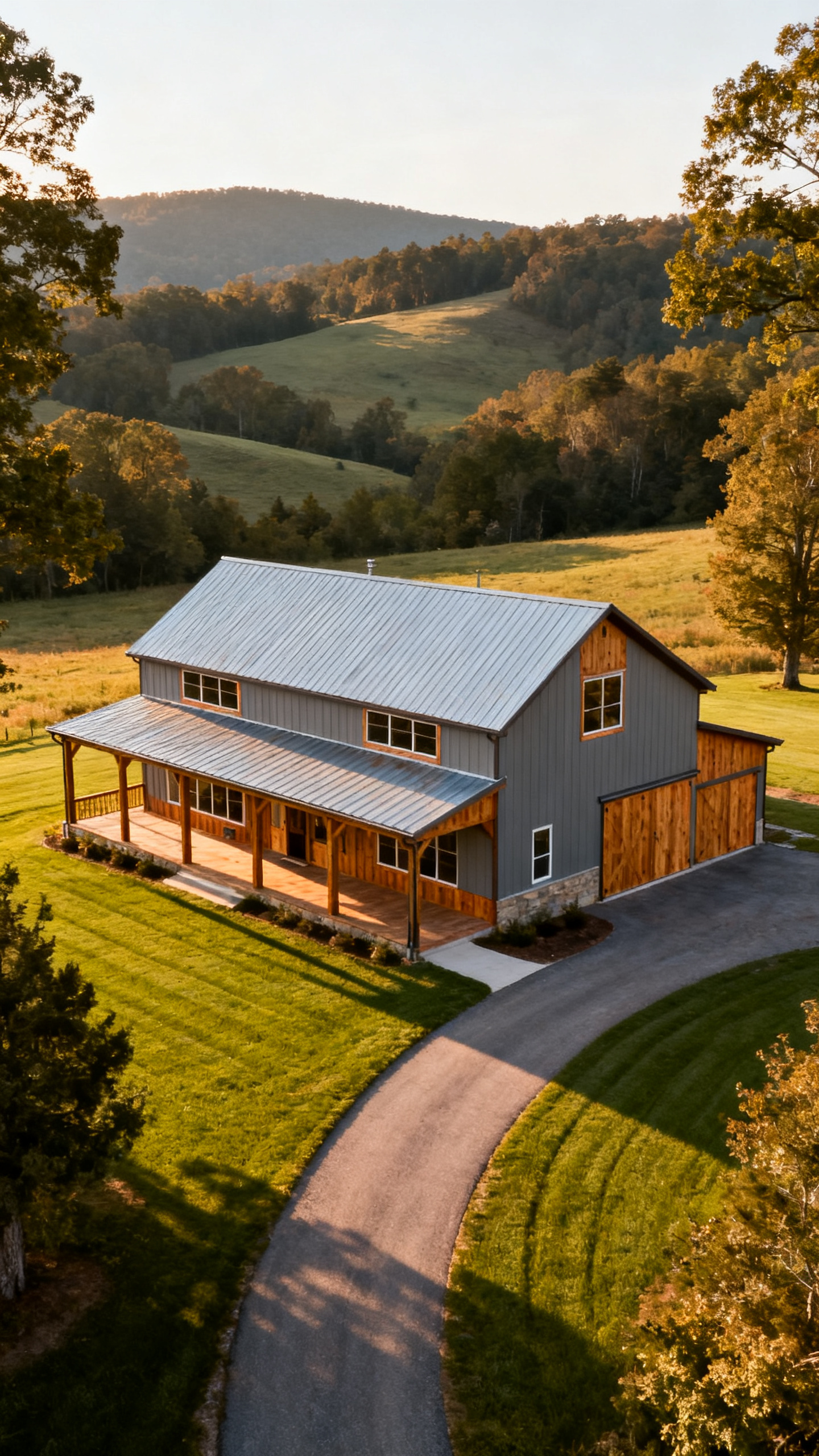
Some homes look nice from the driveway, then totally disappear from above. This West Virginia barndominium does the opposite, and thats exactly why it sticks in your head. For readers who love barndominium design, land planning, and smart exterior details, that difference matters more than ever right now as rural builds keep trending. Tools Week content leans into practical inspiration, and this one gives you a clear look at the visual choices that make a property feel stronger, sharper, and more memorable. In this post, you will see how rooflines, driveway flow, porch placement, material contrast, and site layout all work together. By the end, you will know what to notice, what to borrow, and what to avoid if you want the same standout effect.
-
Frame the Home From Above
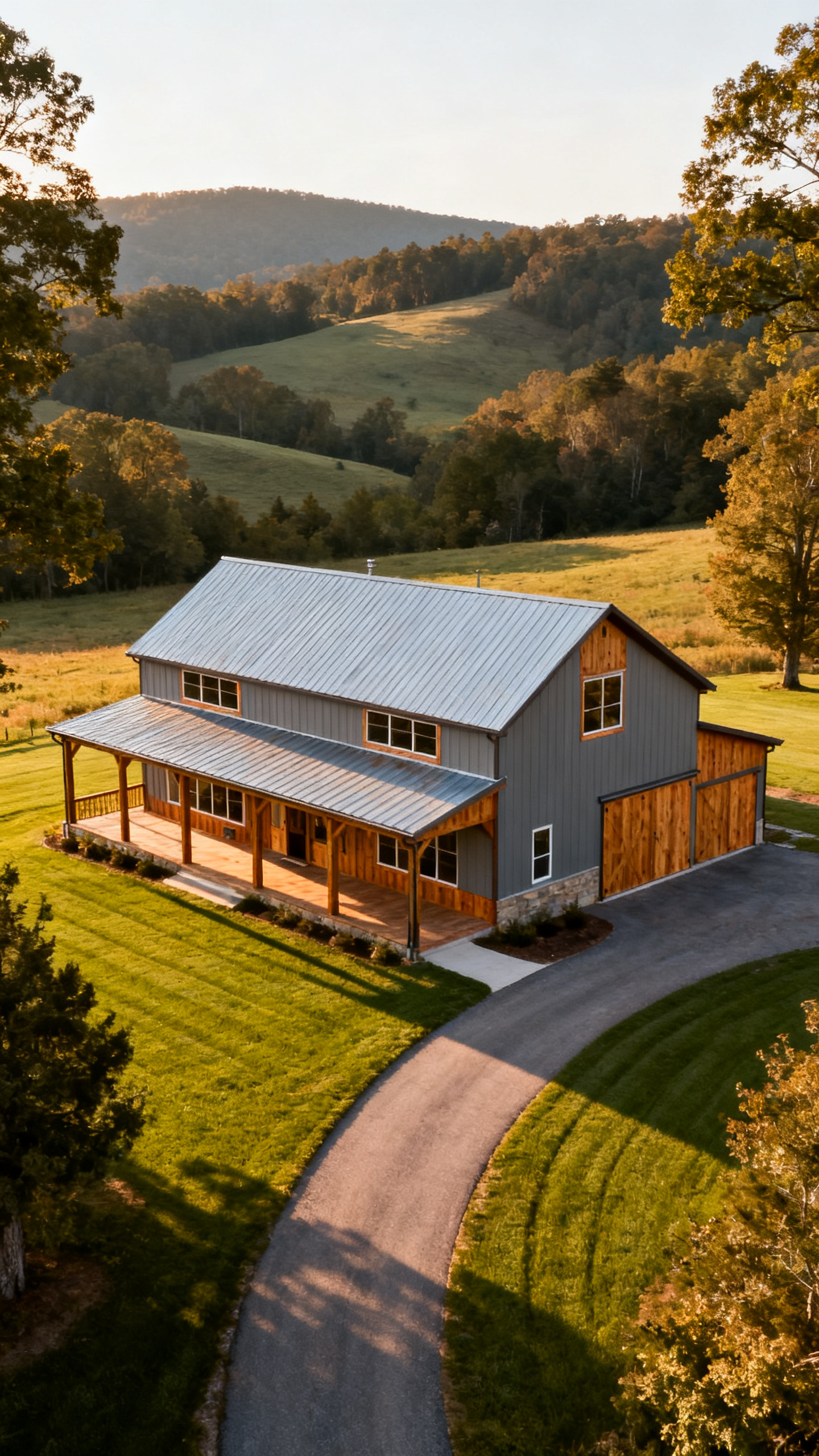
A lot of barndominiums are designed for eye-level impact only. They may have a nice porch, a clean entry, and good siding color, but from an aerial view the whole place can feel flat and forgettable. Thats usually because the home and land were planned separately instead of as one visual unit. When the roofline, driveway, lawn breaks, and tree placement do not work together, the property loses shape fast. You end up with a building sitting on land, not a home anchored into it.
The fix is to think in layers. Start with the main mass of the barndominium and make sure the roofline is easy to read from above. Simple gables often work best because they create a clean strong silhouette. Then map the driveway so it guides the eye toward the home instead of cutting awkwardly across the lot. Add open lawn around the structure to give it breathing room, and use clusters of mature trees at the edges to frame the scene rather than block it. Covered porches, clear facade symmetry, and visible transitions between gravel, grass, and planting beds help the entire property read better in one glance.
That is why this West Virginia barndominium feels different. It was clearly composed to look complete from the sky, not just from the road. The result feels calmer, more expensive, and honestly way more intentional. I remember seeing a rural build once that had great finishes but looked like a shed dropped in a field from above. This one avoids that mistake, and it sets up the next thing that really makes it memorable.
-
Use Rooflines That Read Clean
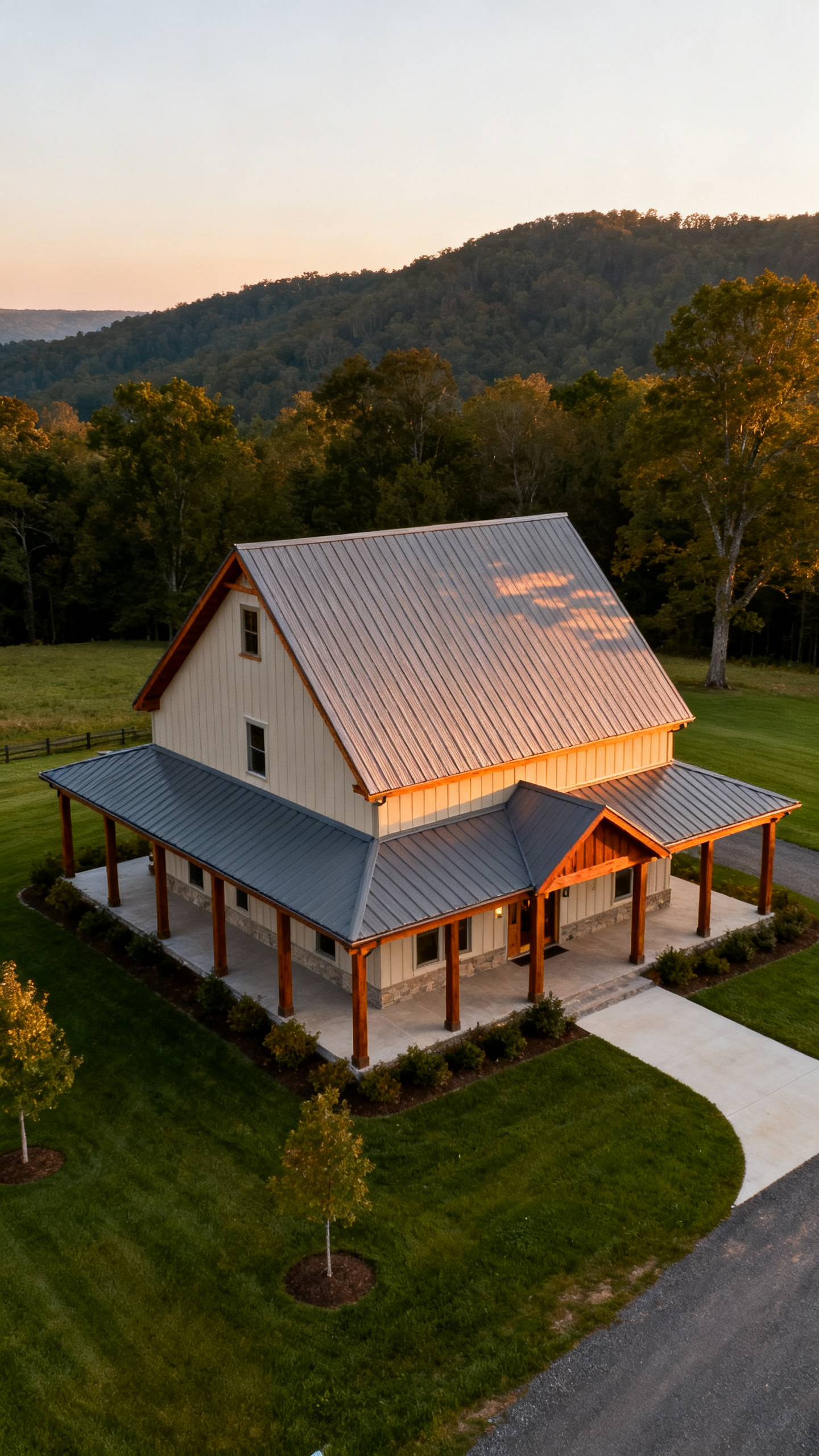
One big reason a barndominium stands out is surprisingly simple: the roof makes sense. Busy roof designs can feel impressive on paper, but from above they often create visual noise. Too many intersections, odd add-ons, and mismatched slopes make the structure feel pieced together. That confusion gets worse in aerial photography, where the roof becomes one of the first things your eye reads. A cleaner roofline does not just look better, it makes the whole property feel more polished and higher end.
If you want this same effect, focus on roof geometry before anything decorative. Start with one dominant gable shape and keep secondary roof forms subordinate to it. Use matching pitches where possible, and avoid random bump-outs that break the silhouette. Metal roofing works especially well for barndominiums because it catches evening light in a soft, crisp way without needing extra detail. If the porch roof, garage volume, and main living mass all feel connected, the home reads as one complete idea. Even practical features like gutters, overhang depth, and chimney placement should support that visual order.
This West Virginia barndominium benefits from that exact discipline. The roofline feels calm, strong, and easy to understand in one glance. That kind of clarity builds instant curb appeal and stronger shareability too, because people can process the image fast and remember it later. On Pinterest especially, that quick visual read matters a lot. And once the roofline is doing its job, the next standout feature becomes even more obvious: how the materials create contrast without feeling loud.
-
Let Materials Create Contrast
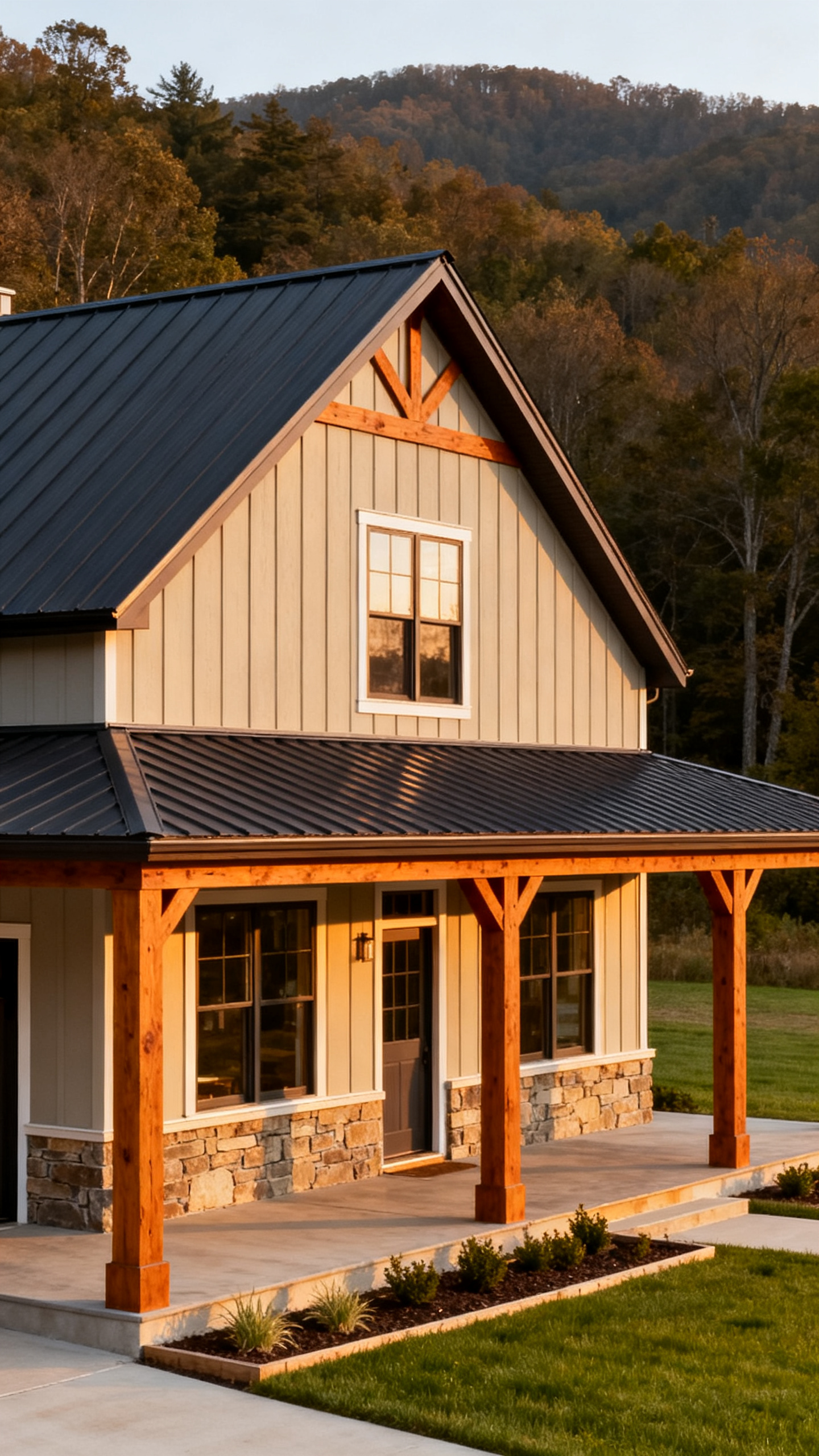
A memorable exterior usually does not rely on size alone. It relies on contrast you can understand instantly. Many rural homes miss this by using one flat material across every surface, which can make even a well-built barndominium look plain from a distance. When siding, roofing, trim, and porch elements all blend together too much, the house loses depth. From the air, that problem gets worse because subtle details disappear and the structure can start looking like one big block.
To fix that, use just two or three materials with clear roles. Think metal roofing for structure, neutral siding for the main body, and warm wood accents to highlight the entry, porch posts, or gable details. Stone at the base can add grounded weight if it fits the budget and region. The key is placement, not overload. Put contrast where you want the eye to land first, usually around the porch and front-facing roof sections. Keep the palette natural so it works with West Virginia’s wooded setting instead of fighting it. Earthy greens, weathered grays, charcoal metal, and honey-toned wood tend to photograph beautifully together.
That restrained contrast is part of what makes this property feel expensive without trying too hard. It catches attention fast, but it still feels believable and rooted in the landscape. Thats a pretty sweet spot. When a home uses contrast well, it becomes more legible in photos, more memorable in feeds, and more appealing in person too. And once the materials are working, the land itself has a better chance to support the architecture instead of fading into the background.
-
Shape a Smarter Driveway
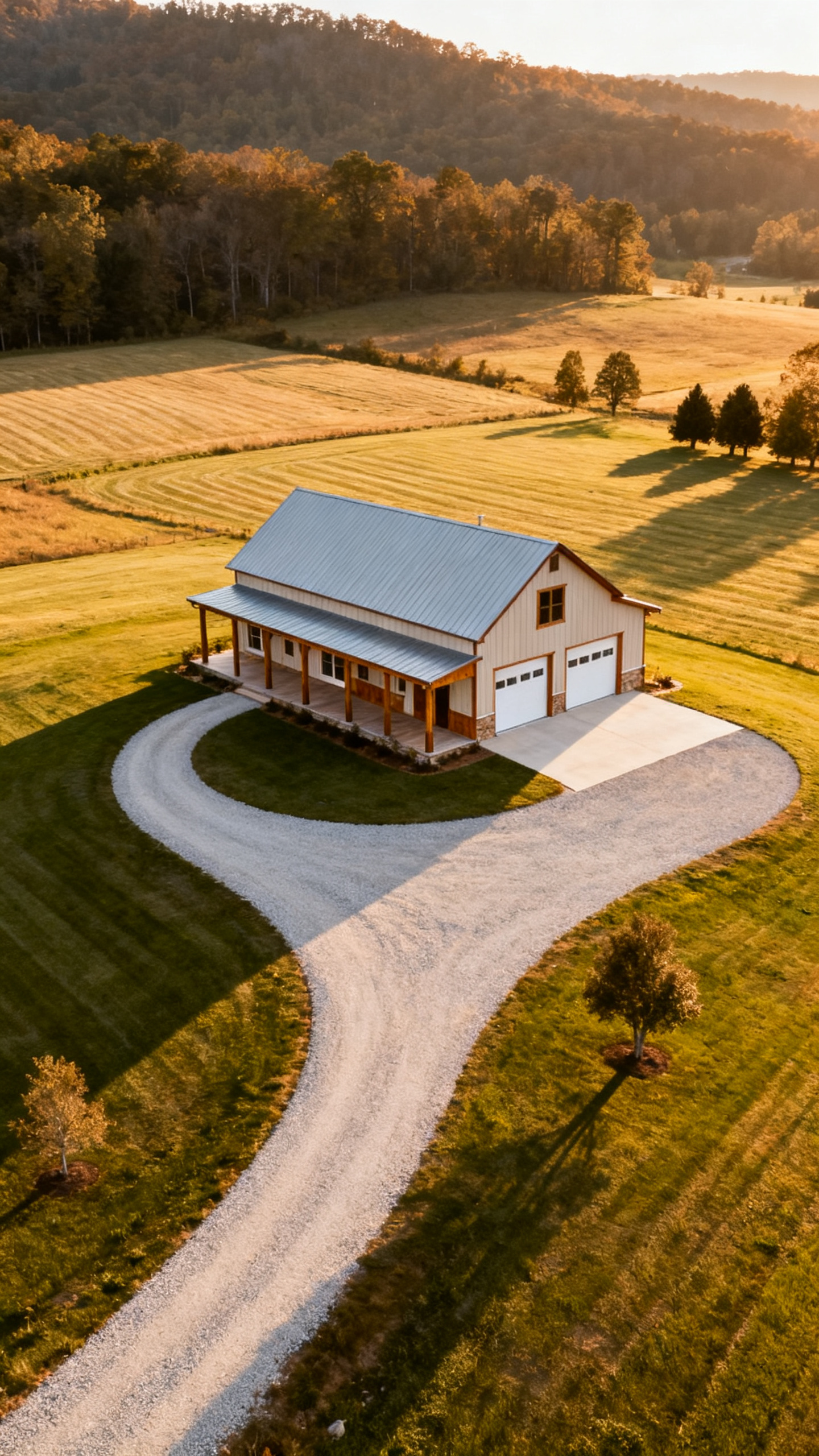
Driveways do more than move cars. On a rural property, they shape the first impression and the aerial composition at the same time. A poorly placed driveway can make even a beautiful barndominium feel off balance. Straight shots that hit the house awkwardly, oversized gravel pads, or messy turnarounds can pull attention away from the architecture. This happens all the time on larger lots because people think land gives them freedom to improvise. It does, but it also makes weak layout decisions way easier to spot.
A smarter driveway creates direction. Ideally, it should guide the eye naturally toward the front of the home while also making sense for daily use. Gentle curves usually feel more premium than harsh angles, especially when they reveal the house gradually. Keep the width proportional to the scale of the structure, and define the edges with lawn transitions, stone borders, or simple planting zones if maintenance allows. Parking areas should feel intentional, not like afterthoughts. If there is an outbuilding, garage bay, or shop area, the driveway should connect those functions without making the site look chopped up from above.
That visual flow is one reason this West Virginia barndominium feels so composed. The driveway supports the architecture instead of competing with it, and that changes the whole mood. The property feels calmer, easier to read, and more welcoming before you even get close. Little choices like this are easy to skip, but they matter a lot. Once the movement across the land feels right, the final difference comes down to how the open space around the home is handled.
-
Give the Land Purpose
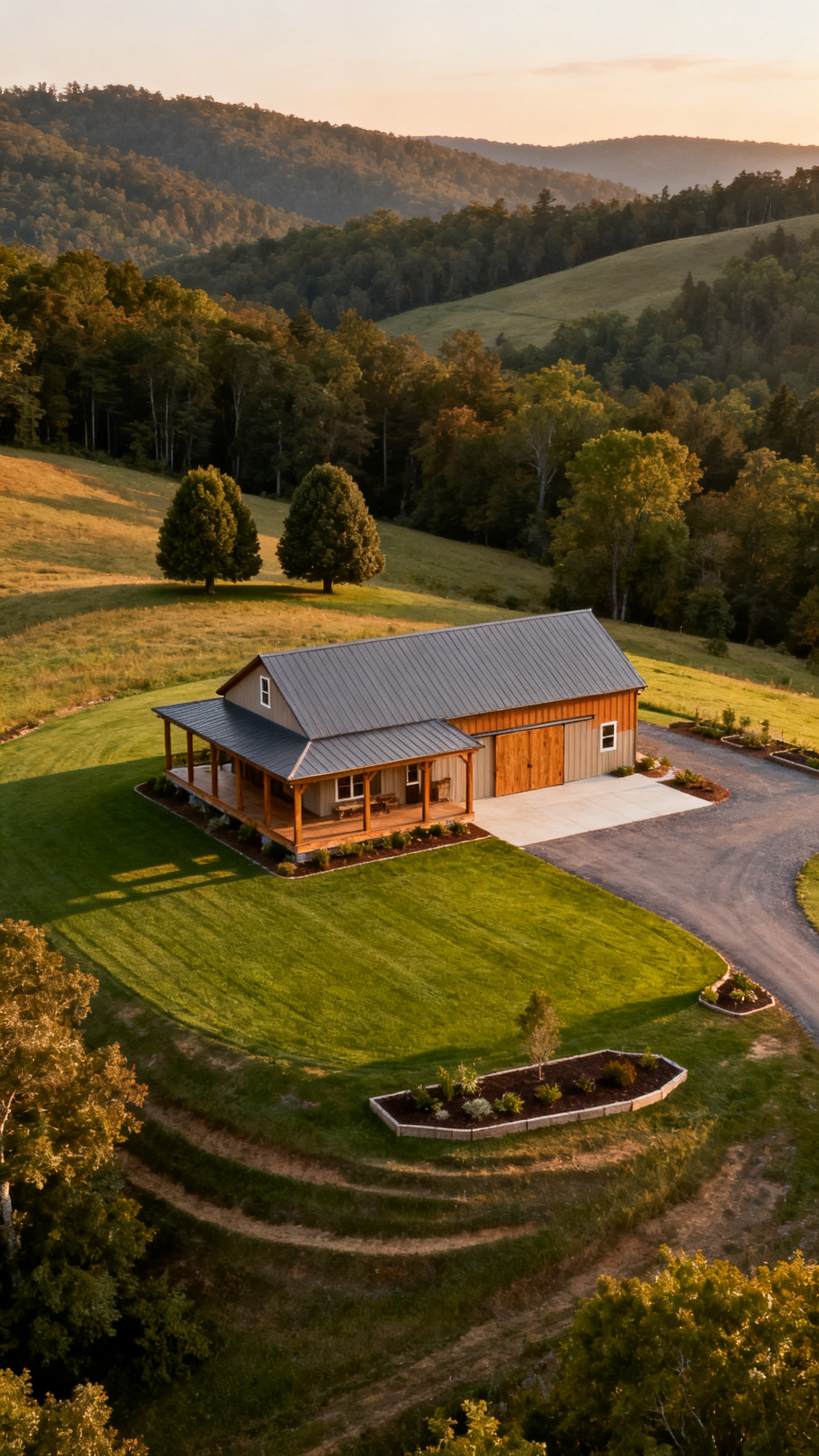
Open land can be a huge advantage, but only if it feels intentional. Too many rural properties have lots of acreage and very little structure in the way the outdoor space is used or viewed. When everything is just open grass, random tree cover, or leftover dirt around the foundation, the home can seem disconnected from the site. It almost looks temporary, even when it is not. Thats a missed opportunity because land is one of the biggest reasons people are drawn to barndominium living in the first place.
Purposeful land planning starts with zones. Keep a clear open area around the house so the architecture reads cleanly from above. Then create distinct outer layers like tree lines, pasture edges, gravel utility areas, or a detached building pad if the property needs one. Think about where the eye travels in an aerial image. It should move from home, to porch, to driveway, to lawn, to wooded backdrop in a way that feels natural. Drainage paths, retaining changes, and mowing lines also matter more than people think. Even small grade adjustments can make the property look sharper and more established within one season.
This is where the West Virginia setting really helps. Rolling ground and Appalachian trees give the home a built-in sense of place, but the layout still has to support that beauty. When it does, the whole property tells a better story. You are not just seeing a house. You are seeing a complete rural setup that feels livable, calm, and worth saving for later. Thats exactly the kind of visual difference that keeps a barndominium from blending in with every other build online.
-
Highlight the Porch Presence
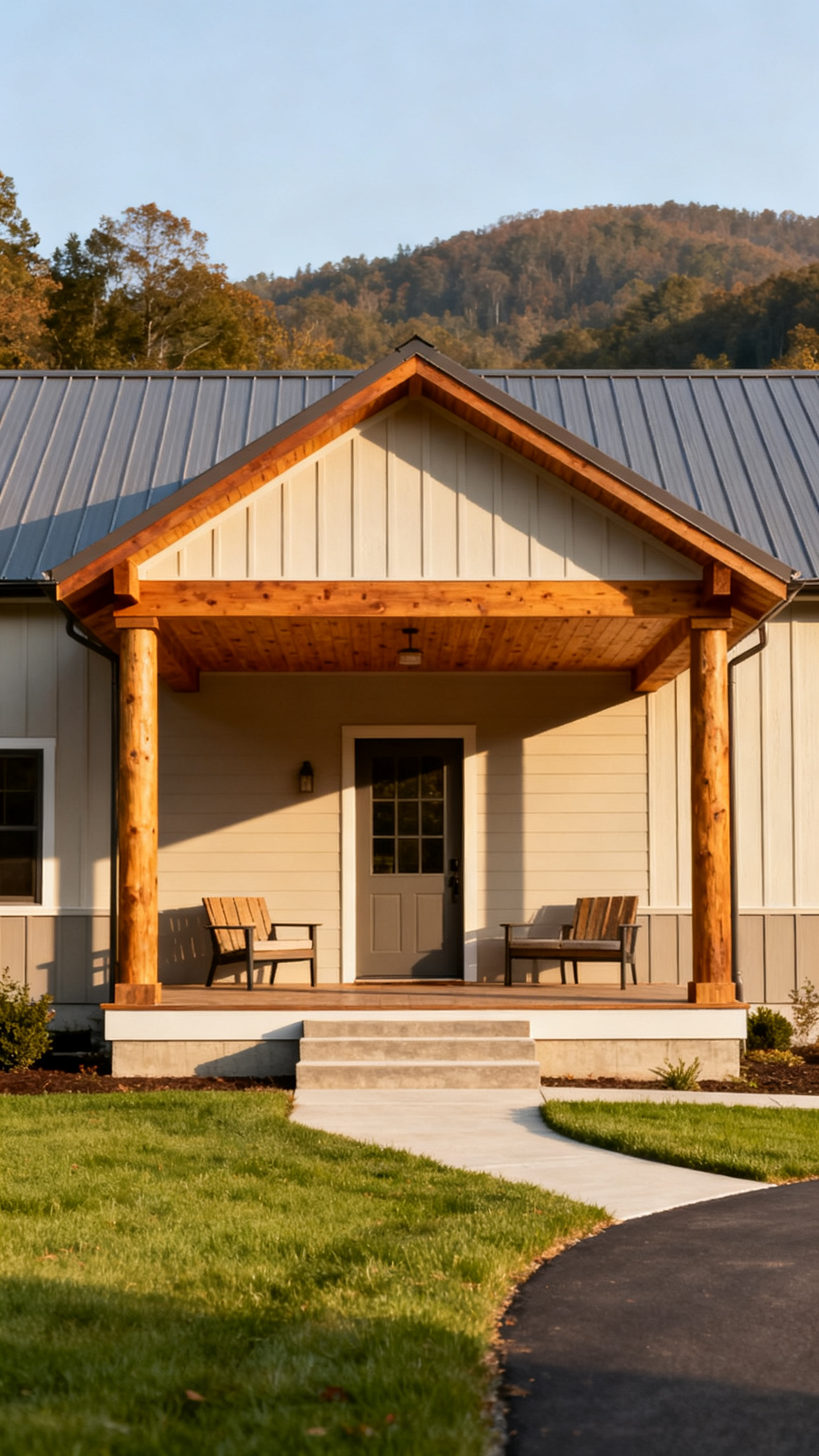
Porches are a huge part of barndominium appeal, but they are often treated as a bonus instead of a focal feature. Thats a mistake, especially on homes meant to feel inviting and grounded. A porch does more than add shade. It creates rhythm on the facade, gives scale to the structure, and helps the home feel lived-in even when viewed from a distance. Without that layer, some barndominiums can feel a little too boxy or industrial, which turns off readers looking for warmth and personality.
To make the porch count, focus on depth, proportion, and visibility. A shallow porch can disappear from above or read like trim instead of usable space. A deeper covered porch with strong posts, warm wood ceilings, and clear placement along the main facade creates visual weight in a good way. Tie it into the architecture with matching roof forms and repeat materials used elsewhere on the home. From a design standpoint, porch lighting fixtures, rail details, outdoor seating zones, and entry steps should all feel intentional, even if they stay simple. The goal is to make the porch look like part of the original design, not a later add-on.
This West Virginia barndominium gets that balance right. The porch softens the structure, adds character, and gives the exterior a welcoming anchor. It also helps explain why the home feels more memorable from above and at a distance. You see shelter, scale, and warmth all at once. And really, thats what makes a standout barndominium work: every exterior move supports both daily life and visual impact.
What makes this West Virginia barndominium feel so different is not one flashy feature. It is the way the rooflines, materials, porch, driveway, and land layout all work together to create a home that reads beautifully from above and feels grounded on the property. That kind of planning gives you a more memorable exterior, stronger curb appeal, and a rural home that looks just as good in real life as it does in a saved pin. If this breakdown sparked ideas for your own build, keep exploring the details that make land and architecture work as one. The more intentional the outside becomes, the easier the whole project gets to love.
Pin this guide for later so you can use these barndominium layout ideas when planning your own exterior.