
13 min read
7 Virginia Barndominium Details That Change Everything


Edited by: Louise (Editor In Chief)
Fact/quality checked before release.
Fact/quality checked before release.

Some homes look nice in a photo, but they do not really stay with you. Then there are properties like this Virginia barndominium that feel different the second you see the full view. That usually comes down to more than a pretty roofline or a good camera angle. At Tools Week, we spend a lot of time studying what makes practical builds feel elevated, livable, and worth saving for later. In this guide, you will see the exact design moves that give a rural barndo stronger presence, better flow, and that hard-to-explain wow factor. If barndominiums are on your radar right now, this is a smart time to look closer because buyers and builders are paying way more attention to full-property design, not just the house itself.
Use the Land Better
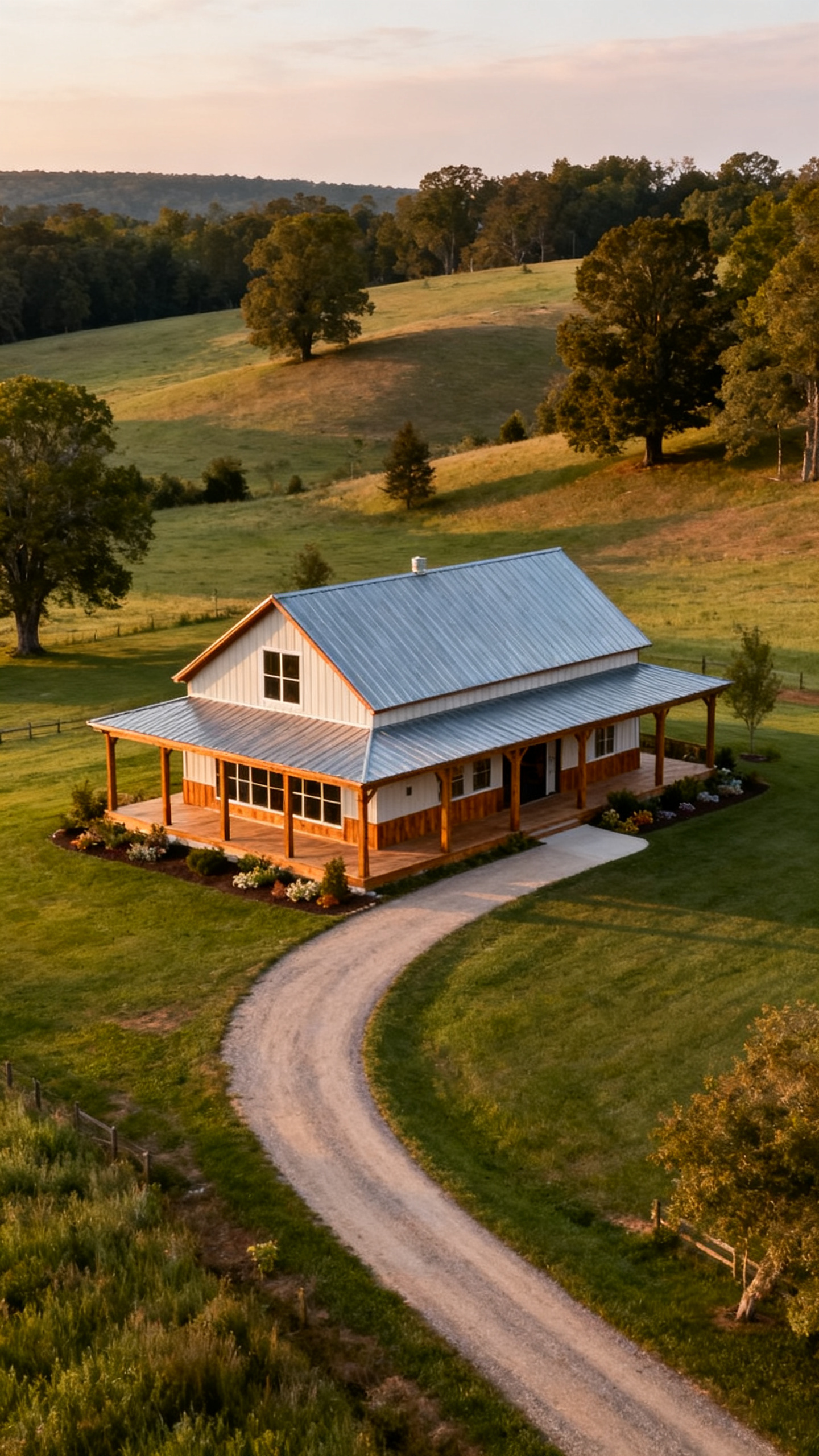
A lot of barndominiums look fine on paper but feel underwhelming in real life because the house and the land are not working together. You might have a solid floor plan, a durable shell, and a nice porch, yet the whole property still feels flat. That is usually a site placement problem. When the home sits without purpose, the driveway feels awkward, the yard feels empty, and the building loses some of its visual impact from the road or from above.
The stronger approach is to let the land do part of the storytelling. Start with the long view first. Map the driveway so it creates a clean lead-in rather than dumping visitors beside the garage. Keep the home visible as the focal point, then frame it with open lawn, mature trees, and enough breathing room around the footprint. In Virginia, that often means taking advantage of gentle slope, existing shade trees, and natural clearings. Leave space for future outbuildings or a shop, but do not crowd the main structure. Even small changes in orientation can improve sun exposure, drainage, and first impression in a big way.
That is what makes some rural barndominiums instantly more memorable. The property feels calm, balanced, and intentional before you ever step inside. It is the kind of place people pin because the whole setting looks finished, not just the house. I have seen homes with average finishes feel more premium just because they were sited well, and honestly, that still surprises me. Once the land and layout click, the architecture gets to shine harder in the next step.
Let the Roof Lead
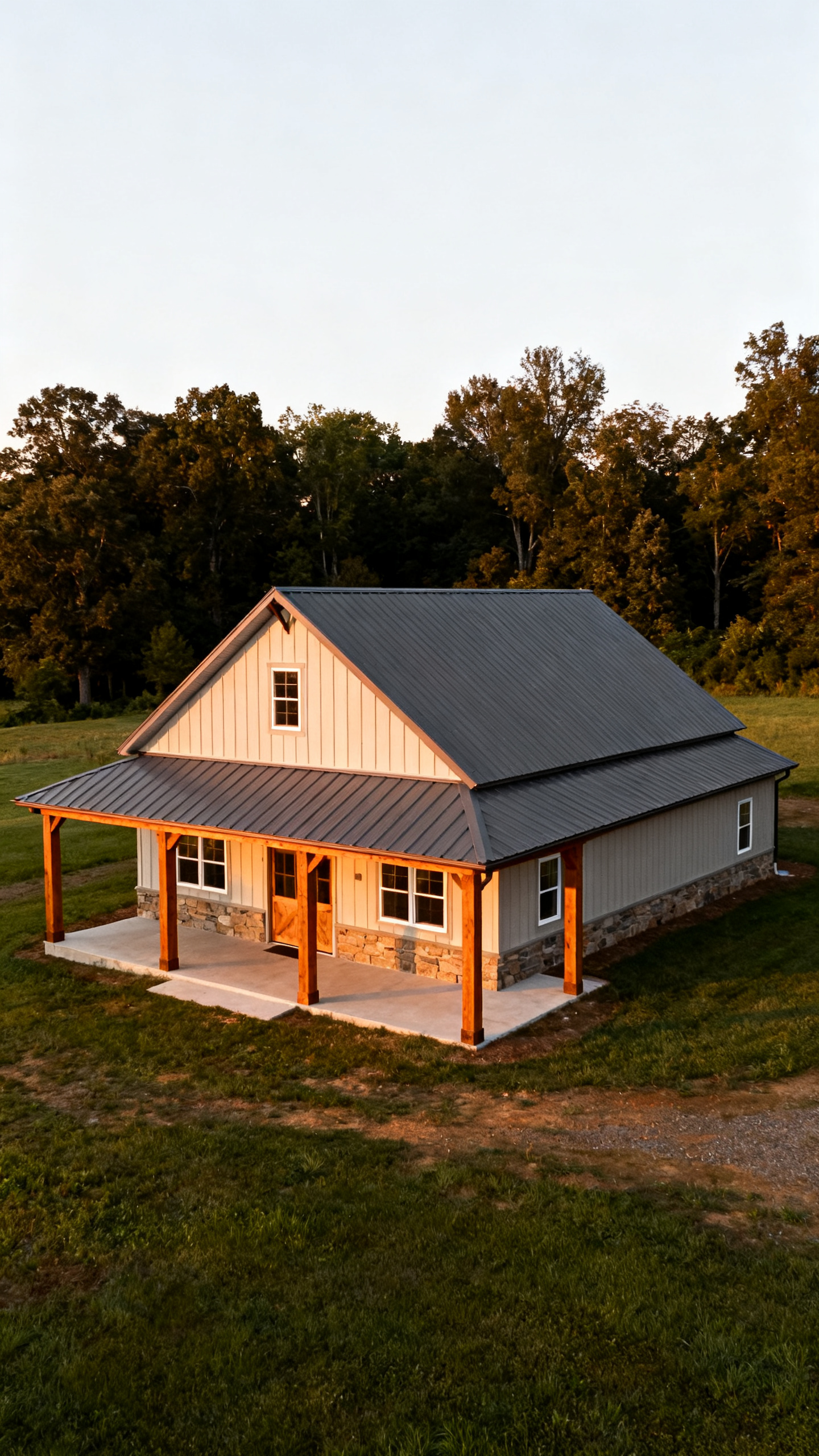
One reason a Virginia barndominium can feel so different is the roofline. Sounds simple, I know, but this is where a lot of builds either look sharp or fall apart visually. If the roof is too busy, too shallow, or disconnected from the porch and facade, the whole home can start to feel more like a utility building than a finished residence. And that is the exact line most owners are trying not to cross.
A clean gabled roof with realistic pitch usually gives the strongest result. Pair that with a quality metal finish in a grounded tone like charcoal, weathered gray, or muted bronze. Then repeat that sense of order across the rest of the structure. Covered porches should feel attached, not tacked on. Window placement should support the roof rhythm. If you are planning a new build, ask for elevation views that show the home from a distance, not just close-up. This helps you catch proportion issues early. In many cases, one simplified roof adjustment makes the entire house feel more custom and more expensive.
That visual clarity creates instant curb appeal and stronger save-worthiness on visual platforms too. People may not say, wow, great roof geometry, but they feel it right away. The home reads as confident and settled. On a rural property especially, a well-composed roofline gives the whole structure presence against open sky and trees. Once that top profile feels right, the exterior materials have a much easier job carrying the look.
Warm Up the Exterior

A lot of barndominiums miss the emotional part of design. They may be strong structurally, efficient to build, and easy to maintain, but they can still come off a little cold. That often happens when every exterior surface is hard, flat, or overly matched. Metal roof, metal details, plain siding, and not enough natural texture can make the home feel sharp in the wrong way. You want modern durability, sure, but you also want warmth.
The easiest fix is material contrast. Add wood accents where the eye naturally lands first, like porch posts, soffits, gable details, shutters, or the front entry zone. Mix in stone only if it supports the style, not just because it is popular. In Virginia’s rural setting, warm stained wood next to soft neutral siding often feels more grounded than high-contrast black-and-white everything. Keep the palette tight and repeat materials with purpose. A good rule is to choose one dominant surface, one secondary texture, and one accent finish. That keeps the home cohesive and avoids the patchwork look.
When this balance is done right, the barndominium feels more welcoming before the front door even opens. It stops reading like a shell and starts reading like a home. That is a huge difference, especially for buyers and dream-build planners collecting ideas online. People respond to materials they can almost feel through the screen. And once the exterior has that warmth, larger windows become even more effective because they connect the inside and outside in a way that feels natural, not forced.
Frame Bigger Outdoor Living
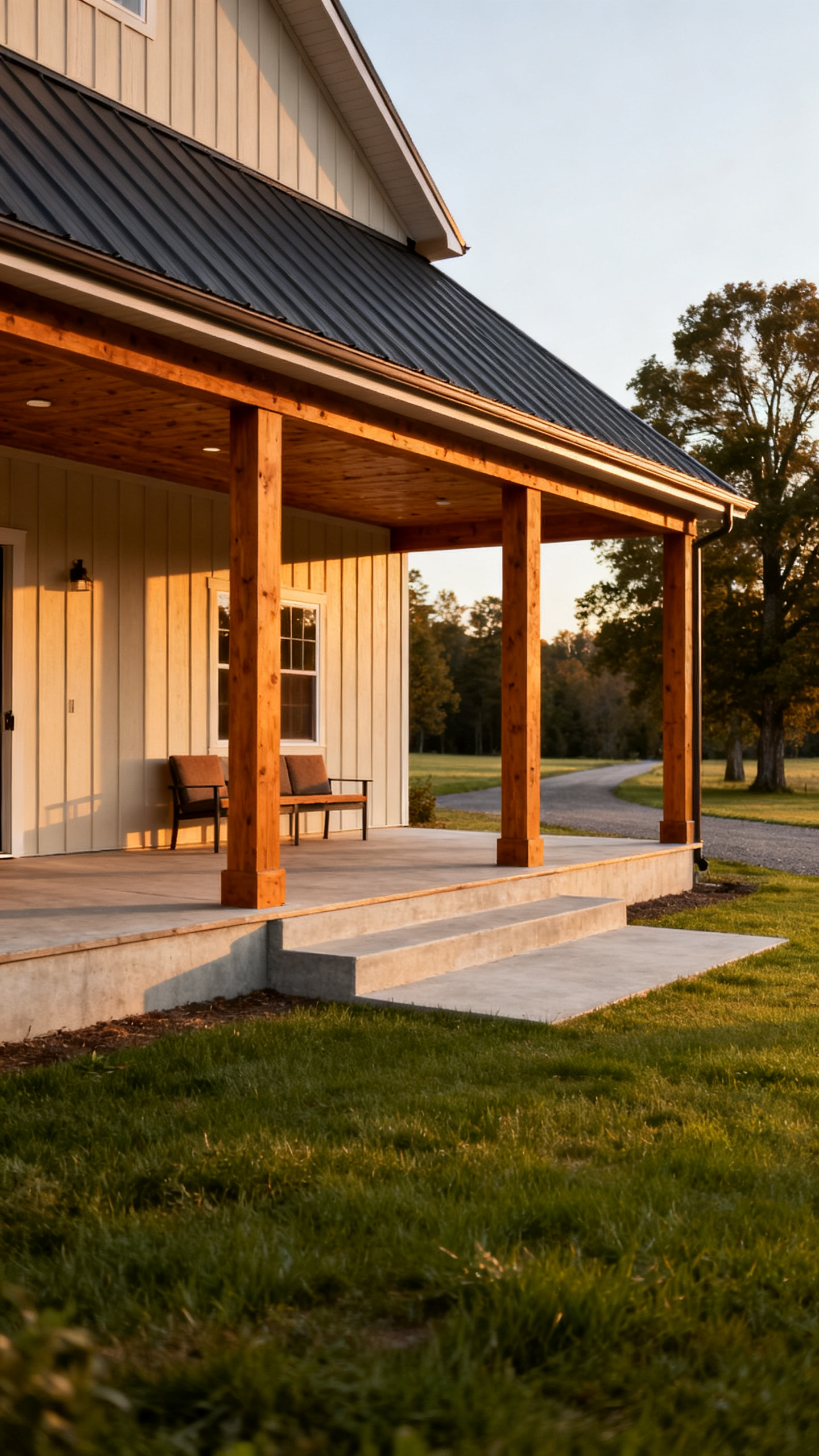
One thing that sets apart a memorable barndominium is how it handles outdoor living. Too many builds treat the porch like an add-on instead of a major feature. That is a missed opportunity, especially on a rural Virginia property where the surrounding land is part of the appeal. If the porch is too shallow, badly placed, or visually disconnected, the home can lose some of that welcoming, slow-living energy people are chasing.
A deeper covered porch usually delivers more value than owners expect. Aim for enough depth to hold real seating, not just decor. Use sturdy wood posts, a visible roof extension, and steps or hardscaping that connect naturally to the lawn and driveway. If possible, orient the main outdoor zone toward the best long views or sunset light. Ceiling materials, porch lighting, and flooring matter too. Even basic concrete can look elevated with the right scale and trim details. The point is to make the porch feel like an outdoor room, not a narrow strip along the front.
This single feature often changes the emotional read of the whole property. A larger porch suggests comfort, flexibility, and a life that actually fits the landscape. It is the kind of detail that gets people to stop scrolling because they can instantly picture morning coffee, storm watching, or a quiet evening outside. Funny enough, I used to think porches were mostly about looks, then I spent time in one that was designed well and yep, I totally got it. Once the porch is working, the big windows around it start doing even more heavy lifting.
Open the View Lines
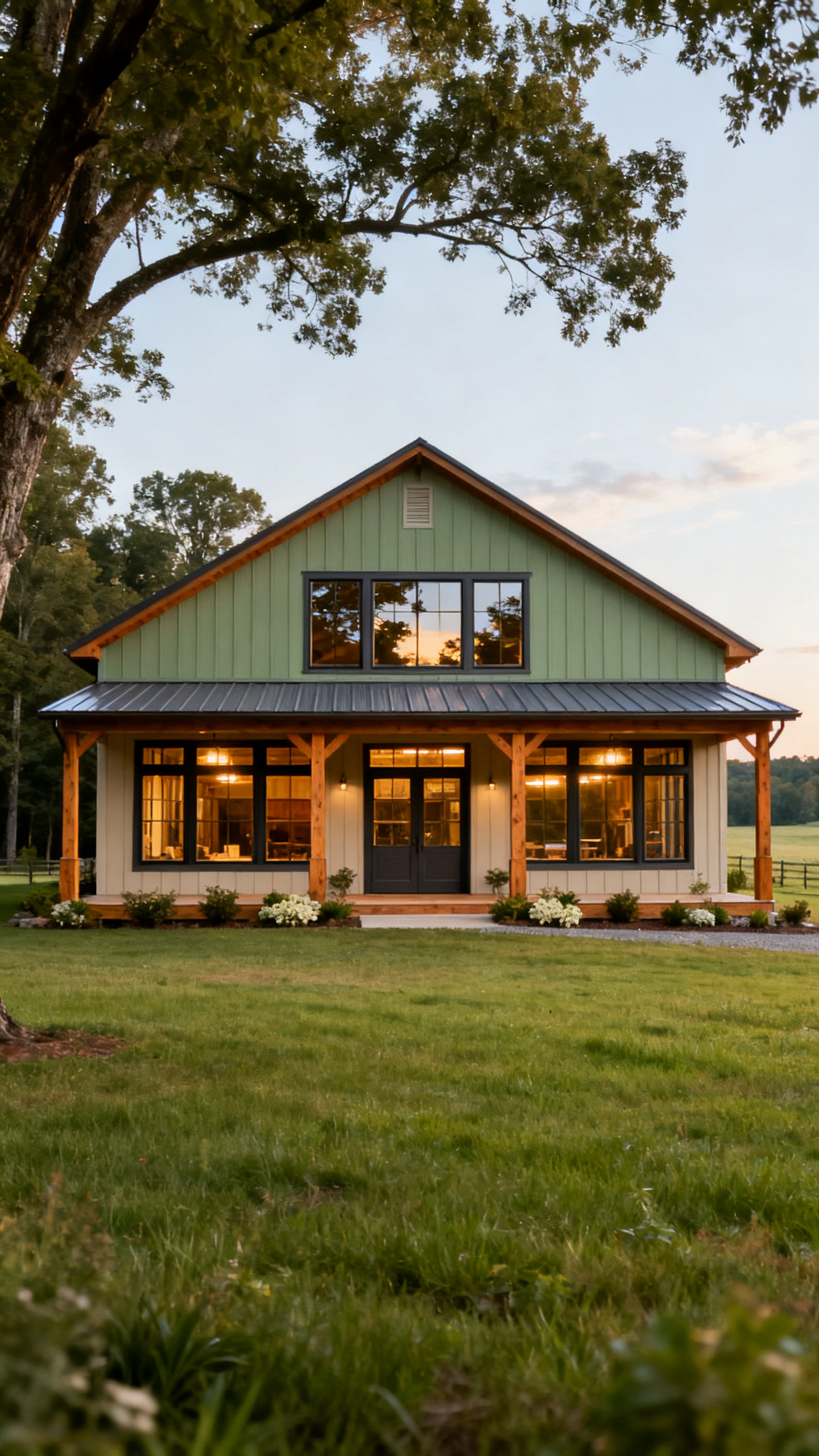
Large windows are one of the biggest reasons a barndominium can feel polished instead of plain. But window design is not just about adding more glass. If the placement is random or the proportions feel off, the facade can look cluttered fast. You also risk wasting the best views on secondary rooms while the main living spaces get weak light. That hurts both curb appeal and daily living, which is kind of the worst combo.
Start by deciding where the strongest views are across the property. Then place the largest windows where people actually spend the most time, usually the great room, kitchen, dining area, or primary suite. Group windows in a way that supports the exterior architecture rather than competing with it. Black frames can work, but softer bronze or dark neutral finishes often blend better into natural rural settings. If privacy is a concern, use strategic orientation, porch depth, and tree placement before defaulting to tiny windows. Good view planning should also account for sunrise glare, summer heat, and winter light.
When the view lines are handled well, the home feels bigger, brighter, and more connected to the land. That makes the whole barndominium experience more immersive. From the outside, balanced windows add rhythm and refinement. From the inside, they turn ordinary moments into something better, like dinner with a pasture view or rain moving across the yard. And that visual connection is usually what gives these homes their strongest emotional pull. Once the glazing works, even simple landscaping starts to matter more because it is now part of the everyday interior experience.
Keep Landscaping Relaxed
Landscaping can make or break the way a barndominium feels, and the biggest mistake is trying too hard. A rural property does not need fussy planting beds everywhere to look finished. In fact, overdesigned landscaping can fight the simplicity that makes a barndo appealing in the first place. The goal is not to mimic a suburban show home. It is to create a clean transition between architecture and land.
Start with the basics that give the biggest visual return. Define the driveway edges, clean up the foundation planting, and make sure the lawn areas look intentional rather than leftover. Use native or region-friendly plants that can handle Virginia’s seasonal changes without constant babysitting. Ornamental grasses, simple evergreen structure, and a few well-placed shrubs often do more than dozens of small plants. Gravel, stone, or mulch should feel natural and low maintenance. Keep sightlines open so the house remains the hero. If there are mature trees on site, use them. They add instant age and character that money usually cannot buy.
This restrained approach makes the property feel settled and believable, which is a huge part of the charm. It supports the architecture instead of competing with it. People scrolling through exterior inspiration can spot that difference right away, even if they cannot explain why. The whole place looks easier to live with, and that matters. No one wants a dream build that turns into a full-time yard project. Once the landscaping calms down and starts doing its quiet job, the driveway arrival becomes the final detail that pulls the property together.
Make the Driveway Matter
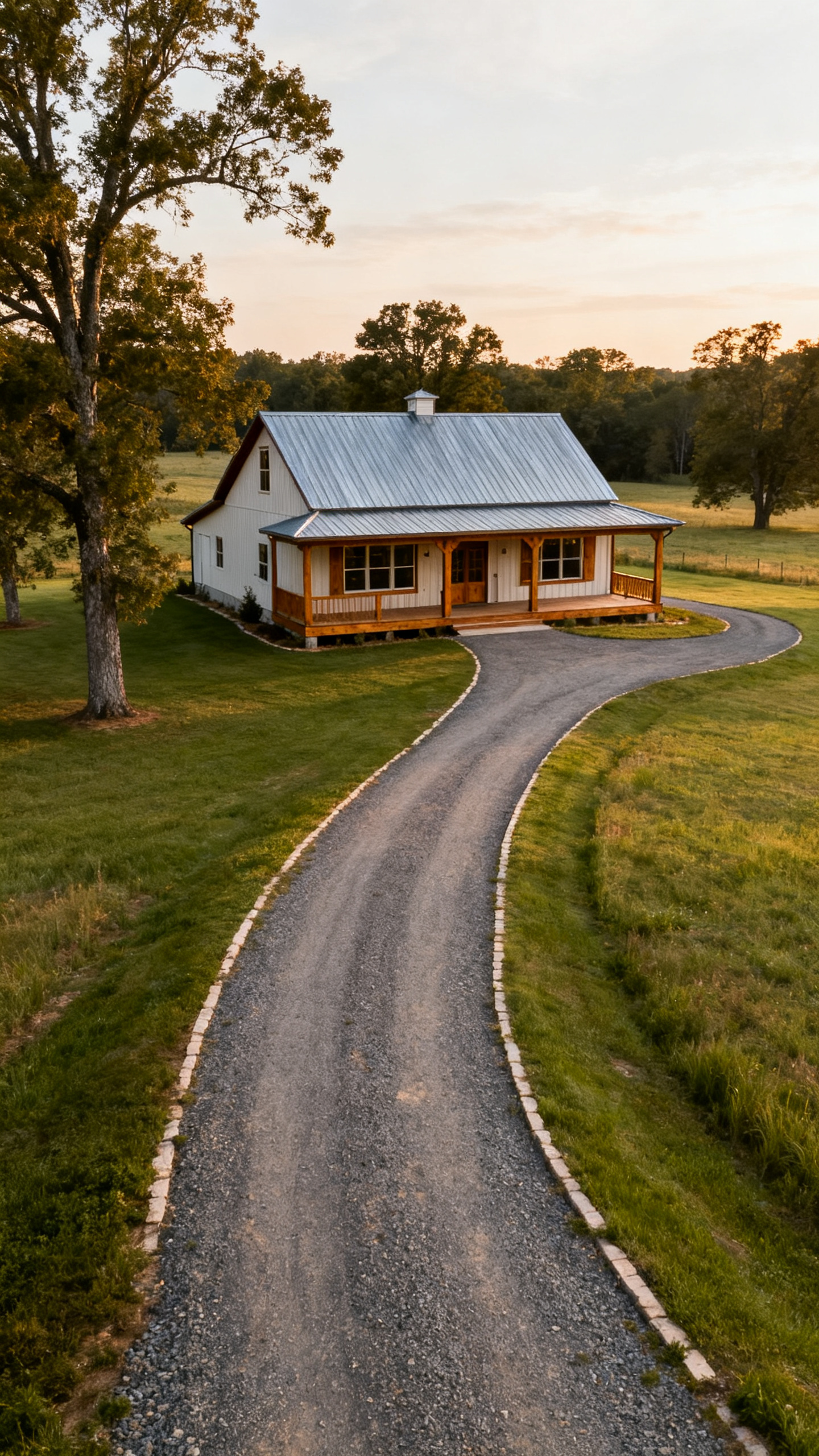
The driveway sounds like a practical detail, but it shapes the entire first impression. On a rural property, it is often the first design element visitors experience, and one of the biggest reasons an average barndominium can feel more impressive. A short, awkward, or poorly aligned driveway can make the home seem smaller, harsher, or less intentional. That is why the best full-property views almost always include a strong approach sequence.
Think of the driveway as visual guidance. It should lead the eye naturally to the house while also supporting drainage, parking, and turning space. Long driveways work especially well when they curve gently or reveal the home in stages. Gravel can look beautiful if maintained well, while asphalt or concrete may make sense for steeper sites or heavier use. Edge definition matters more than many owners realize. Mown borders, stone shoulders, or simple planting at the entry can make the route feel finished without going overboard. If you are building from scratch, test the approach from multiple angles before finalizing the layout.
When this piece is done right, the home gains a sense of arrival. The property feels larger, more thought through, and frankly more expensive. It is one of those details that quietly signals quality. In Pinterest-worthy aerial views, the driveway often acts like a visual path that pulls you right into the save. And for real life, it does the same thing. It prepares people for what they are about to see. That is part of what makes a Virginia barndominium like this one feel so different in the first place.
What makes a Virginia barndominium feel different is rarely one flashy feature. It is the way the land, roofline, materials, porch, windows, landscaping, and driveway all work together to create a property that feels complete. That is why the Pinterest view of this kind of home is so compelling at first glance, you are seeing more than architecture, you are seeing a whole lifestyle setup. If you are planning, saving ideas, or comparing designs, use these details as your filter for what is really worth copying. The more intentional the full-property design becomes, the easier it is to build something that still feels right years later.
Save this guide to your Virginia barndominium board so you can compare these design details before you plan your layout.